Political Dynamics Amidst Conflict: Netanyahu’s Predicament and U.S.-Iran Relations
As tensions continue to escalate in the Middle East, President Trump has recently hinted at the possibility of launching new military strikes on Iranian infrastructure. This potential escalation raises profound questions not just for U.S. foreign policy, but also for the political landscape of Israel, particularly concerning Prime Minister Benjamin Netanyahu’s standing.
Israel’s political system is markedly different from the U.S., characterized by its parliamentary structure. Elections are imminent, yet the specifics remain shrouded in uncertainty. Observers note a downward trend in Netanyahu’s fortune, with prediction markets now estimating only a 33% chance he will remain prime minister after the upcoming elections. This stark contrast to his previous position — where he held about a 51% chance just 50 days earlier — speaks volumes about the shifting political winds.
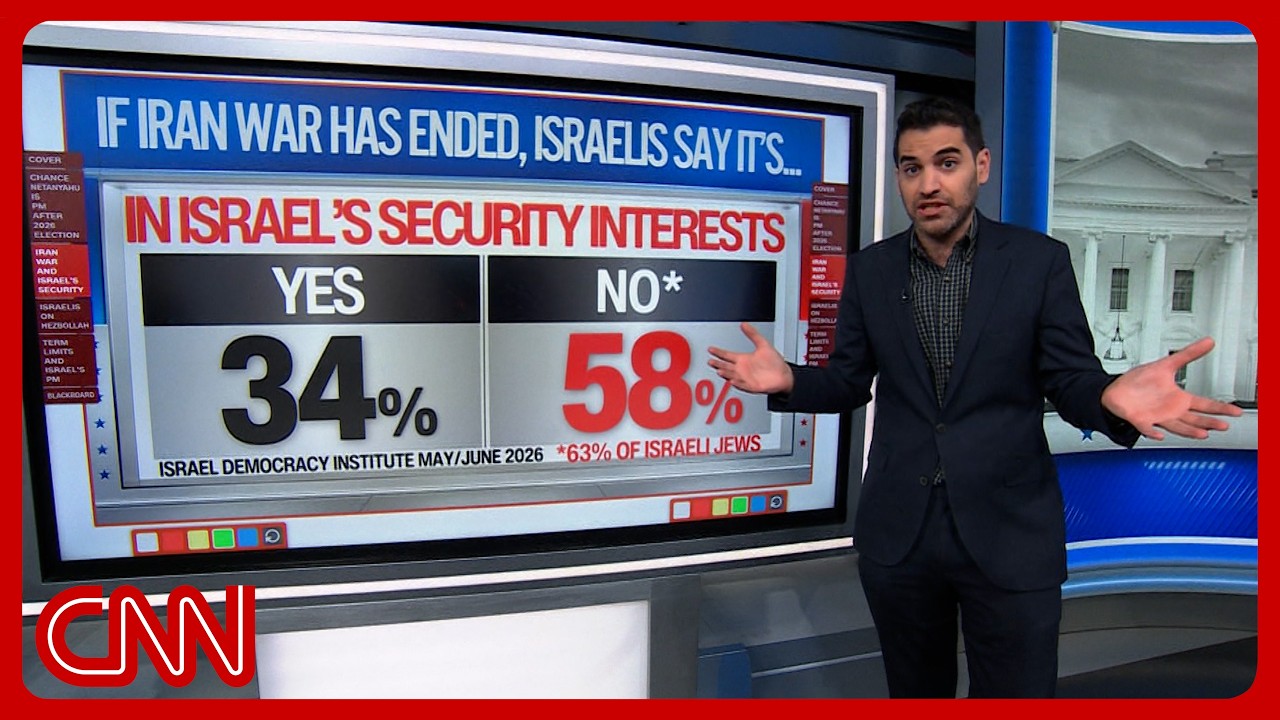
Central to Netanyahu’s political calculus is the ongoing conflict with Iran. While Trump appears to view military engagement as a politically advantageous maneuver for his domestic agenda, public sentiment in Israel tells a different story. A survey reveals that 58% of Israelis, including 63% of Jewish citizens, believe that an end to the Iran conflict would not be in Israel’s security interest. This illustrates a nuanced landscape where military actions can be both a tool for national security and a potential political liability.
Consider the case of Hezbollah, Iran’s proxy in Lebanon. Here, too, the Israeli public’s sentiment is clear: 52% express dissatisfaction with how the Israeli government is addressing the threat posed by this militant group. With the prospect of war on two fronts—against both Iran and Hezbollah—Israelis are feeling increasingly uneasy, which may further complicate Netanyahu’s leadership.
Adding another layer of complexity, there is an emerging discourse around the idea of term limits for Israeli prime ministers. A substantial 61% of citizens support the introduction of such limits, a move that could be interpreted as a public rebuke of Netanyahu’s long tenure. Having held office for almost two decades across various terms, his persistent leadership may be reaching its limit. In many democratic contexts, extended power can lead to apathy, and Netanyahu’s situation is no exception.
But Israel’s strategic relationship with the United States poses yet another challenge for Netanyahu. The dynamic suggests that any significant military action requires a tacit approval from Trump. There are indications that Netanyahu might face considerable limitations in his military operations against Iran unless he aligns closely with U.S. directives. Reports of "swear words" exchanged in phone calls between Netanyahu and Trump further emphasize the tense nature of diplomatic negotiations. Should Trump signal a ceasefire or a diplomatic resolution with Iran, Netanyahu may find himself constrained in his response options.
These challenges lead us to a crucial question: if Trump were to agree to a deal with Iran, essentially pressuring Israel to limit its military actions, how would Netanyahu manage this politically? Would he be able to convince an anxious Israeli electorate that such compromises are in the nation’s best interest?
Given the political landscape and the realities of the regional conflict, Netanyahu’s options seem limited. Defeating Hezbollah or significantly degrading Iranian influence in the region through military means has proven elusive. Israeli Defense Forces’ assessments indicate that disarming Hezbollah can only be accomplished through internal Lebanese dynamics, rather than direct military intervention from Israel.
As Israel approaches its elections, the underlying complexities of U.S. relations, Iranian aggression, and internal political pressures create a precarious position for Netanyahu. The Prime Minister’s long-standing political acumen suggests he could navigate these obstacles, yet the current circumstances could well mark a tipping point. The electorate is keenly aware of the precariousness of their national security under Netanyahu’s leadership.
In sum, the interplay of military strategy, public opinion, and electoral politics in Israel forms a complex tapestry. As Netanyahu faces mounting pressure at home and abroad, the next few months will be critical in determining his political future and the broader geopolitical landscape in the region. The stakes are high, not only for Israel but for U.S. foreign policy in a continually evolving Middle East.